Saying Nothing Is Still a Choice


Of everything I do in my Equality, Diversity and Inclusion module, one practice has earned its place every single year: inviting someone into the room to tell their own story, and letting students ask them anything. This post is about why that works with HR students in particular, and how you might build something like it into your own teaching.
For my final year HRM students, that someone is Christian Owens. Christian is a trans man who transitioned while serving in the police force, and through GenderSpace UK he now spends a good part of his life talking to rooms like mine. He has come to class every year I have taught the module, and his is one of the sessions students talk about most, long after the module has finished.
I've thought a fair bit about why.
Part of the answer is simple and slightly uncomfortable. For many of our students, it is the first time they have knowingly spent time with a trans person and heard them talk about their own life. They come into the final year interested, passionate about fairness at work and ready to care about the people they will one day work alongside. They know the Equality Act and can talk about inclusive language and policy with real confidence. What a curriculum rarely offers is the chance to hear, face to face, how those laws and policies have played out in one person's working life.
That gap matters on an HR degree because these students are going to write the policies. They will sit in the meetings where policy gets interpreted, field the awkward questions from managers and decide whose discomfort gets taken seriously. Much EDI teaching prepares them to do that from a distance, with frameworks and case law. Christian brings them in close. He talks with real openness about his family and his mental health, and about what transitioning meant for him while he was still serving. Then he tells them nothing is off limits and they can ask him anything, and he means it. Those parts of his story belong to him and to the room, so I won't retell them here. What students take from them is a sense of what it costs a person when an organisation, and the people in it, don't know what to do.
The moment I watch for each year is when the room realises that not all of the harm Christian describes came from hostility. Some of it came from people who said nothing at all, because they were worried about getting it wrong. That is a recognisable instinct, and an HR one. Our profession is good at waiting for guidance, deferring to procedure and letting the policy do the talking. Hearing what that caution feels like from the other side changes how students think about their own future silences. I can make that point in a lecture. It lands differently when the person it happened to is the one telling you.
The students' weekly reflections show me what stays with them. Several wrote that this was the first time they had met a trans person, let alone sat and talked with one, and that they came away realising there was far more to understand than they had assumed. Some described it as the week the module came down to earth, when the theory on the slides finally met a real life.
The reflections I keep rereading go further. A few students already had trans friends, and the session made them wonder whether they had really been listening. They wrote honestly about holding back in those friendships, staying quiet because they weren't sure what to say or which words would come across as respectful. Sitting with Christian's story, they recognised that saying nothing out of fear of getting it wrong is still a choice, and one they didn't want to keep making. What they took away was his simplest piece of advice: ask the person, because everyone wants something different. When a future HR practitioner admits, in a piece of assessed work, that they hesitated with a friend because they didn't know what to say, the silence I described earlier stops being an abstraction and becomes something they can act on.
This is what I mean by the power of lived experience, and I want to be careful with the phrase, because it has become easy to use. In a lot of institutional settings "lived experience" has turned into a box to tick, a guest slot on the timetable or a quote in an annual report. Sessions like this can also slide into extraction, where a marginalised person's difficulty becomes a learning resource for a room that listens, applauds and goes home unchanged. What guards against that with Christian is that the terms are his. He chooses to tell his story and he chooses to leave the door open. Because the invitation to ask anything comes from him, students can take it up without feeling they are prying. That is a lesson in itself for future HR practitioners, who will spend their careers handling other people's disclosures and need to learn the difference between being invited in and helping themselves.
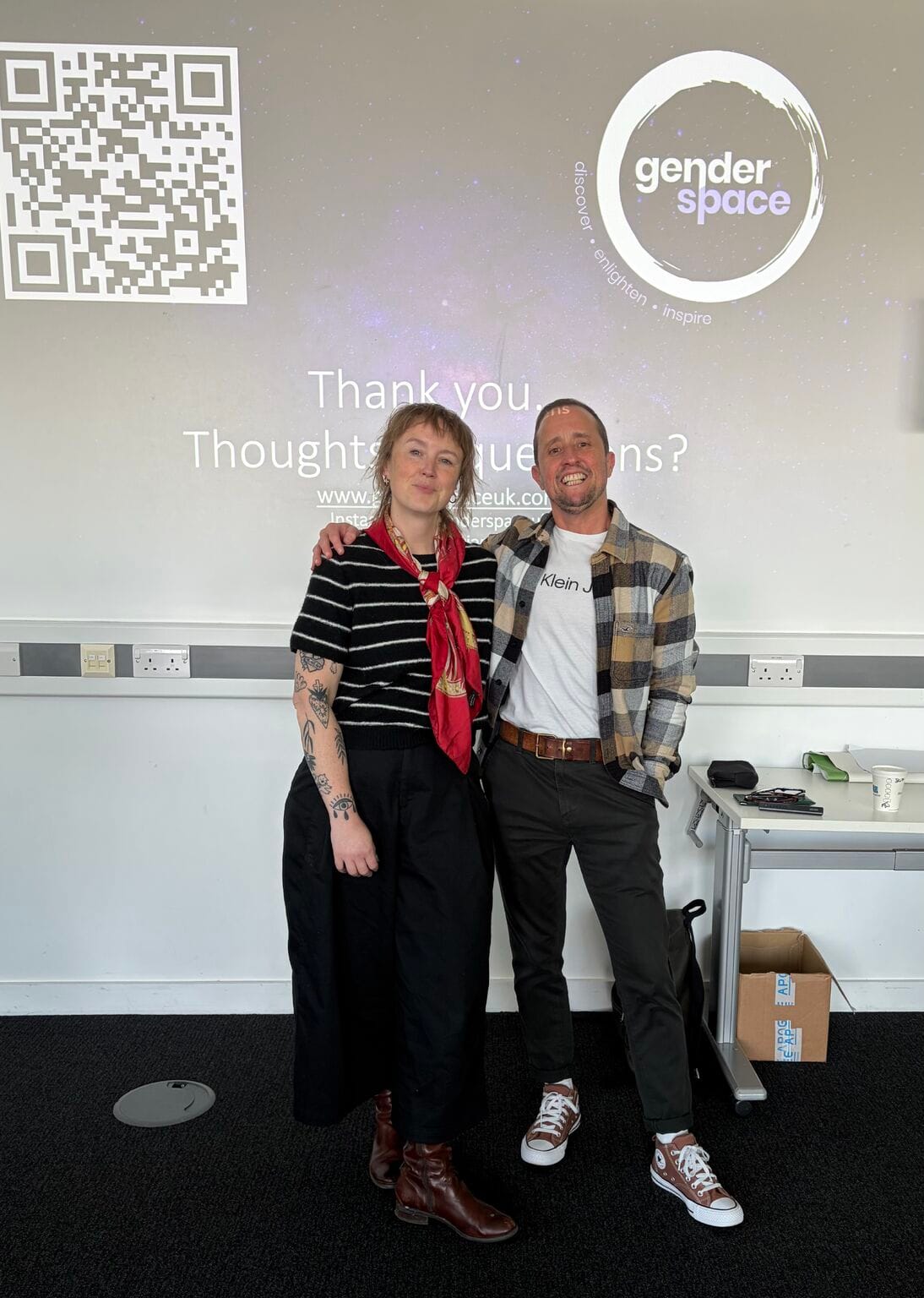
Taking trans lived experience into your own EDI teaching
If you teach EDI, or any part of people practice, I'd urge you to make room for this kind of session and to be braver about it than feels comfortable. Trans inclusion is a subject plenty of educators are steering around at the moment. The public debate is loud, the guidance keeps shifting and nobody wants to be the lecturer who said the wrong thing. I understand that. It is also the same silence Christian describes, and students notice when we model it.
So invite people in, and treat what they bring as the expertise it is. Ask how they want to be introduced and what they want the session to do. And pay them. GenderSpace UK is Christian's business, and I pay for his session every year, the same way I would for any other specialist we bring in. Lived experience is too often treated as something people should be glad to give away for the cause, and that expectation lands hardest on the people who already carry the most. Christian's openness is something he chooses to offer, and it shouldn't become the reason we expect the same of everyone.
Then take the invitation seriously. When a speaker says nothing is off limits, students often freeze, worried that their question will sound ignorant or rude. Prepare them for it. Talk beforehand about why asking is better than guessing, let them draft questions in advance, and give them a way to ask anonymously if they need one. A clumsy question asked in good faith, in a room where it is welcome, does far more good than a careful silence, and it is rehearsal for the conversations they will one day have to start as managers and HR advisers.
And make the connections. A powerful guest session can sit in a module like a single bright week and change nothing around it. In mine, students write a weekly reflection and spend the term designing a workplace resource, so what they hear from Christian has somewhere to go, and it often turns up in their work weeks later. Link the session to the law you covered the week before and the structural inequality you discuss after it. Ask students what they would do differently as the colleague or the HR adviser in the stories they have just heard. Give them time to write about it afterwards, because the reflection is where you see whether anything has moved.
If you want one small, concrete thing to do now, Christian has been shortlisted for the LGBTQ+ Community Impact Award at the Sahir House LGBTQ+ Awards 2026. Public voting closes on 15 November, and you can vote at sahir.org.uk.