65 Hours In: Making Joy Visible
Joy is social. Joy happens when the world comes in. Joy often arrives in a collective moment, a shared click that you couldn't have had on your own.
Joy is social. Joy happens when the world comes in. Joy often arrives in a collective moment, a shared click that you couldn't have had on your own.

What looks like student resistance in the classroom usually isn't disengagement. Here's what it might actually be, and what it asks of us as teachers.

We'll talk about sustainable business, sustainable systems, sustainable development goals, but the sustainability of the people doing the teaching rarely makes the list.

As a mode of inquiry, a way of engaging with uncertainty that is rigorous, ethical, and genuinely transformative. We're calling it futuring as inquiry, and it's been reshaping how I think about what futures literacy actually demands of us as educators.

What's In Your Bag? I'm carrying two bags today. A Rough Trade tote with my planner, journal, pens, washi tape, stickers, headphones, a book, water bottle. And a large black leather tote with my laptop, keys, purse, clicker, and an embarrassing number of forgotten receipts, browning
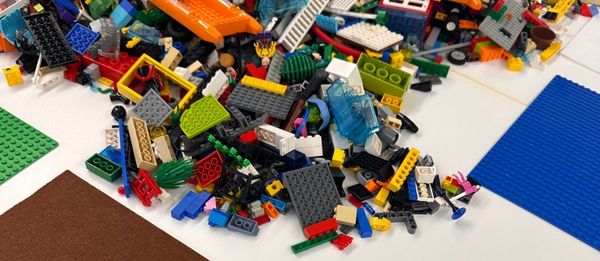
I've just spent two days building with Lego. Climate Play uses LEGO Serious Play methodology, a facilitated process where you think with your hands, build metaphorical models, and tell the story of what you've made.

LJMU's Curriculum Enhancement Internships scheme is funding four student interns to spend six months mapping joy in teaching.

On the difference between teaching about sustainability and actually reckoning with it.

For educators who want to help students engage with uncertainty rather than just prepare for it.

On what it actually feels like to learn something that matters, and what it costs to teach it. There's a version of transformative pedagogy that makes it sound straightforwardly good. Students flourish, assumptions unravel, something shifts. The language of progressive education is full of this: growth, aliveness, possibility.

For educators who want to teach differently but aren't sure where to start — or who are already experimenting and want language for what they're doing.
Because HR education shouldn't just prepare people for the future of work — it should help them imagine the work of the future.

Writing
A reflection on sympoiesis and what it means to think without bounded individuals "Nothing makes itself; nothing is really autopoietic or self-organizing." This simple statement from Donna Haraway's chapter on sympoiesis carries a radical challenge that keeps unfolding the more I sit with it. It'

Teaching Practices
A field note on building a portfolio approach that asks students to develop ethical analysis through cultural engagement—not just case studies I'm launching a new assessment this term for Ethical Practice and Behaviours with my second year HRM students, and it builds directly on my earlier thinking

Writing
Explore media-making as sense-making pedagogy: how students creating podcasts, zines, and videos develops collaborative knowledge creation.

Writing
UK business schools optimise for metrics, not imagination. Teaching Otherwise calls for disruption: creative pedagogy, futures literacy, and ethical learning.

Teaching Practices
A teaching practice using film and TV to explore how workplace diversity is represented across time.

Teaching Practices
Analyse workplace culture through popular media. From The Office to The Circle, learn how films and TV reveal changing workplace ideologies and what alternatives might be possible.

Writing
Most sustainability teaching in business schools operates within "corporate sustainability solutionism"—we tick boxes about the SDGs while the house burns. Dallyn et al offer something different: literal compost bins as curriculum, connecting students with soil and the slow work of decomposition.

Writing
The term is over. Now comes this different time - not exactly rest, but expansion. I've been carrying fragments all year - ideas that sparked during workshops, questions from conversations, provocations from reading. Summer lets me spread these fragments out, see what connects.

Teaching Practices
Students discover priorities through physical objects, then use assessment tools and group work to build ethical decision-making skills.

Writing
Understanding the Sustainability Mindset The Sustainability Mindset Indicator (SMI) assesses how we think, feel, and act in relation to our planetary moment. Rather than measuring knowledge about environmental issues, it explores the deeper patterns of consciousness that shape how we engage with complexity, uncertainty, and our interconnected challenges. At its

Teaching Practices
Spend the entire session outdoors helping students develop genuine connection to the environment. This practice grounds students in place to understand why sustainability matters through felt experience rather than abstract concepts.
Teaching Practices
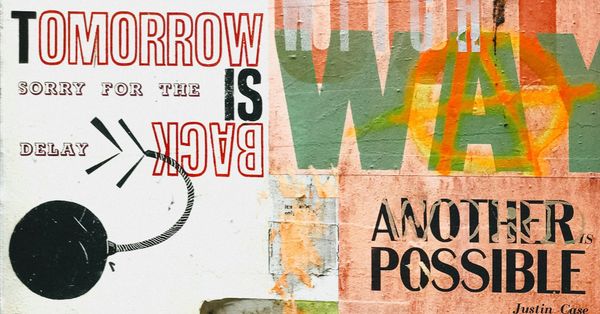
Using magazine images and collaborative collaging to explore complex concepts through visual thinking. Reveals insights that analytical writing might miss, allowing students to hold complexity without immediate resolution. Works for any subject.